


According to the study titled "Brief Assessment of the Transformation in the Turkish Energy Sector in 2020" prepared by SHURA Energy Transformation Center, there has been a great decline in energy demand in Turkey as well as all over the world due to the coronavirus.
 In order for Turkey to realize its energy transformation, an annual investment of 12 billion dollars is needed in the next 10 years. In the first spring months when the epidemic began to show its effect, electricity demand fell by up to 18 percent, while natural gas and coal power plants, which are dependent on imported resources, were the most affected. During this period, the price of electricity per megawatt-hour in the spot market fell by 55 percent to $ 20.
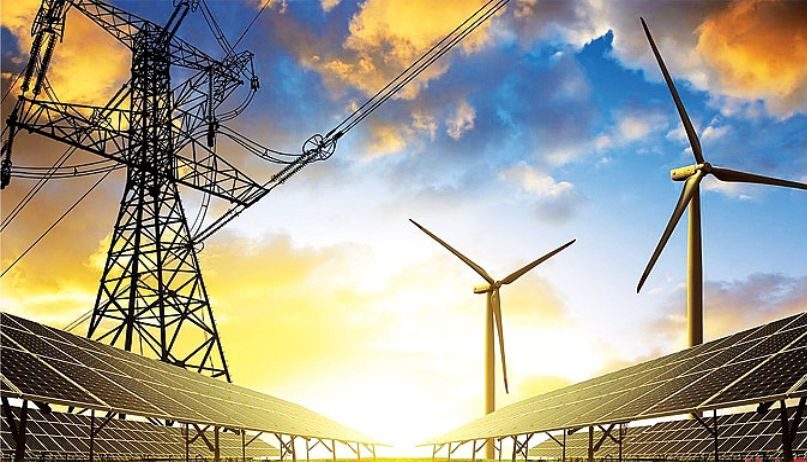
While electricity demand fell, the ratio of renewable energy sources to meet the demand increased, but with the effect of normalization in the summer months, Turkey's electricity demand started to grow again. This year, the capacity of renewable energy sources in Turkey continued to grow despite the pandemic, and these resources accounted for 98 percent of the installed power commissioned. The share of wind and solar energy in total electricity generation has approached 15 percent this year from 10 percent last year. Solar and wind energy installed power increase stood out as the fastest increasing electricity generation capacity in the last 5 years.
By 2030, 10 percent of total vehicle stock could be electric
SHURA's study predicted that the share of renewable energy sources, which accounted for 44 percent of Turkey's total electricity supply last year, could rise to over 50 percent in 2030, and that this increase would be met mainly by wind and solar energy. In the study, it was pointed out that the solar energy potential that can only be installed on the roofs of buildings in Turkey is at the level of 15 gigawatts, and that Turkey can evaluate this potential with its growing housing stock and strong industry.
Emphasizing that the demand for fossil fuel vehicles in the world automobile market has decreased in the post-epidemic period, the study evaluated that at least 10 percent of the total vehicle stock in Turkey in 2030 could be converted to electric vehicles. According to the study, Turkey needs to have a system that can provide the necessary green infrastructure and flexibility to manage the transformation that can be achieved with renewable energy and energy efficiency. In this context, it is calculated that an average investment of $ 12 billion per year is required for the energy transformation in the next 10 years. 40 percent of this investment needs to be realized in the fields of energy efficiency and electrification, 22 percent in infrastructure and facilitating technologies, and 17 percent in renewable energy.
In Turkey, the priority benefits that can be obtained from the energy transformation in the economic recovery packages in the pandemic and its aftermath are listed as economic development, reducing the current account deficit, creating employment and increasing environmental quality. In this context, it is of great importance for Turkey to prepare an "energy transformation program" in which it clearly defines its goals.
 Renewables and energy efficiency will accelerate transformation
Evaluating the study, SHURA Energy Transformation Center Steering Committee Chairman Selahattin Hakman stated that such a clearly outlined program would reduce the costs arising from the possible negative effects of the European Green Deal implemented by the European Union.
Pointing out that an inclusive and long-term planning is required for the continuation of the 2023 targets in order to accelerate the energy transformation, Hakman said: "We anticipate that the vast majority of the increase in electricity demand in the next 10 years will be met by low-cost and easier to finance renewable energy technologies. Supporting this with distribution energy systems will provide opportunities for employment. Improving energy efficiency, which is a local resource and directly provides a net benefit to the economy, is the second half of this transformation."
 SİZİN DÜŞÜNCELERİNİZ?