26 Eylül 2026 Cumartesi$ 48,88 TL€ 55,69 TL
OTOMASYON
Digitalization of Factories is Essential for Competition in the Age of Technology
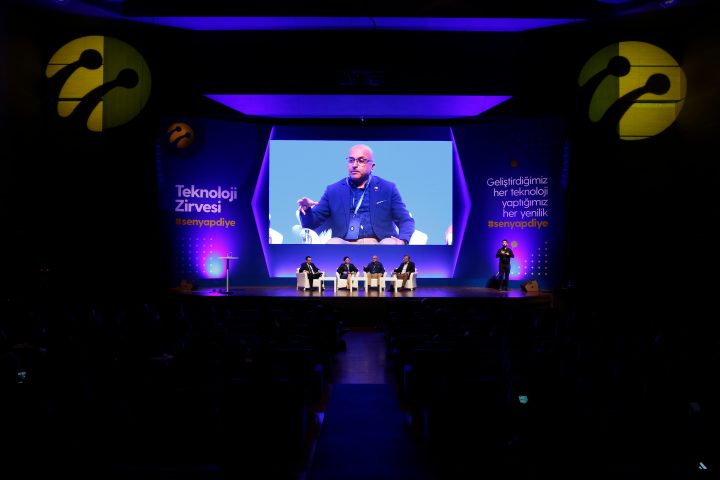
Mitsubishi Electric Turkey Factory Automation Systems OEM Business Development Senior Manager Tolga Bizel gave information about the integration of the real and digital world, which is closely related to production processes in the new industrial phase.
Explaining that Mitsubishi Electric, a technology pioneer in the field of electricity, electronics and automation, responded to Industry 4.0 with its digital and smart factory concept e-F@ctory, Tolga Bizel also gave information about the Internet of Things (Internet of Things), which forms the basis of digital transformation. Reminding the importance of Turkey's ability to compete at the global level in order for its production capability to be sustainable, Bizel said, "Industrialists need to optimize their costs while increasing production quality in order to compete in global markets and gain strength in exports by producing at world quality. At this point, it is important to closely follow the factory automation sector, to be able to quickly adapt to new technologies and to make the necessary infrastructure investments."
Artificial intelligence will change business models
Stating that the digital transformation and smart production systems brought about by Industry 4.0 are concepts that will change societies and world balances, Bizel continued as follows; "In the coming period, where a new production understanding will be formed with interconnected production machines and human interaction; It is foreseen that industrialists, cities, states and researchers will carry out studies in many different fields in order to adapt to the competitive environment that will constantly develop and change. The priorities of industrialists in production stages, governments in country and communication infrastructures, local governments in city infrastructures and researchers in R&D studies will be to respond to the requirements of Industry 4.0. In this period, which we can call the information and technology age, the number of smart cities, smart buildings and smart factories is expected to increase rapidly. Technologies such as mobile communications, wearables, smart vehicles, smart homes and the Internet of Things (IoT) will allow companies to make much wider and more up-to-date data available. At this point, traditional business models are expected to change with the ease of access to data and the increase in artificial intelligence applications. In this process of change, it is possible to say that digital transformation will become a sine qua non of businesses."
The importance of technology and communication is increasing with the Internet of Things
Tolga Bizel stated that the concept of "Internet of Things" can be defined as objects and things connecting to the internet and exchanging data and communicating with both people and each other through the cloud, and conveyed the following information on the subject; "At the heart of the new industrial phase is undoubtedly production. The importance of technology and communication is increasing even more with Industry 4.0, which has recently become the focus of attention of companies, and the "Internet of Things" (IoT), which has a great impact on companies' technology investments. At this point, we, as Mitsubishi Electric, are redesigning our business models and determining which areas we need to focus our technology investments on to improve our performance. With the innovative solutions we have developed with our deep-rooted innovation heritage and superior technology, we are transforming the infrastructure, systems and processes of factories in accordance with the digital age."
The path to personalized production passes through digital factories
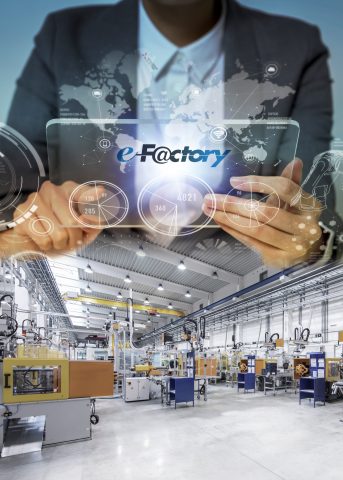
Bizel said that in the age of digital transformation, machines have become able to understand what is happening around them and communicate with each other through internet protocols; "In this way, it will be easier to keep up with the competitive conditions in the market as a result of optimizing the production lines in the factories according to personalized needs. As Mitsubishi Electric, it is possible to build the digital factories of the future today with e-F@ctory, which is our answer to this new industrial phase. In this process, thanks to the acceleration of data transfer between robots and advanced robot technologies that can talk to each other, robots can now control themselves in more detail and in coordination. Today, with e-F@ctory, robots can also communicate with other products on the production line. They share information independently of human control, both among themselves and with the main system that controls the factory, and prepare it to increase efficiency. Because in the e-F@ctory concept, all products in factory automation are integrated with each other and work with an open architecture."
Yorum yapmak için giriş yapın.
Henüz yorum yok. İlk yorumu siz yapın!