
26 Eylül 2026 Cumartesi$ 48,88 TL€ 55,69 TL
FİRMA HABERİ
CO2 project for clean performance from Siemens and Evonik
Siemens and Evonik launch their joint research project Rheticus II. The project aims to develop an efficient and powerful test facility that will produce special chemicals using carbon dioxide (CO2) and water with electricity from renewable sources and bacteria. Rheticus II will receive around €3.5 million in support from the Ministry of Education and Research of the Federal Republic of Germany.
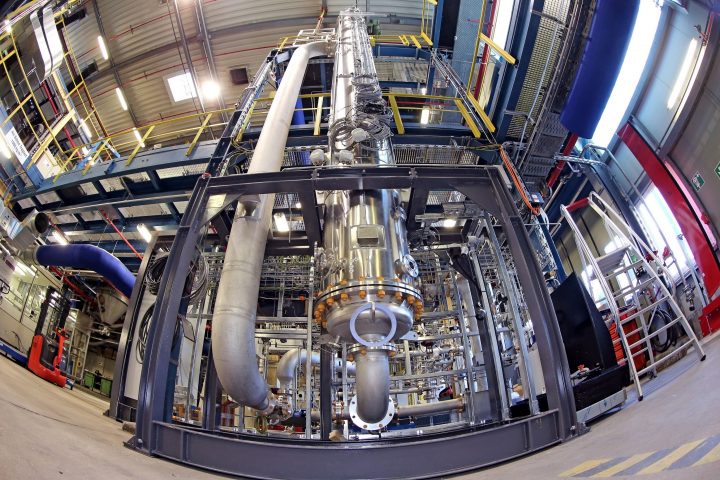
Evonik and Siemens launched their joint research project Rheticus II today. The project aims to develop an efficient and powerful testing facility that will produce special chemicals using carbon dioxide (CO2) and water with electricity from renewable sources and bacteria. The two companies collaborated for two years on the Rheticus I project to create a technically feasible basis for artificial photosynthesis with bioreactors and electrolyzers. Evonik and Siemens are now bringing these two previously separate plants together at a test facility at Evonik's site in Marl (Germany). Rheticus II runs until 2021 and will receive around €3.5 million in support from the Ministry of Education and Research of the Federal Republic of Germany.
Contribute to Germany's successful completion of the energy transition
Thomas Haas, head of the Rheticus project at Evonik, said: "The innovative technology we use at Rheticus has the potential to contribute to Germany's successful completion of the energy transition . In the future, this platform could be installed wherever CO2 is present, for example in power plants or biogas plants. Thanks to artificial photosynthesis, we are able to use existingCO2 as a raw material to produce high-value chemicals."
The first CO2 electrolyzer from Siemens to the project
Siemens is also contributing to the Rheticus project with the world's firstCO2 electrolyzer. Karl-Josef Kuhn, head of Power2X research at Siemens, said they have developed a flexible system that can answer a variety of questions that arise in the energy transition, adding, "We make it possible to store renewable energy by converting it into usable materials such as special chemicals or fuel. We also contribute to the stability of the grid because production becomes so flexible that we can respond to fluctuations in energy supply." Said.
Rheticus technology platform uses CO2 as raw material
The test facility is scheduled to become operational in early 2020. This plant is equipped with electrolyzers and a bio-reactor. In the first step, carbon dioxide and water are converted into carbon monoxide (CO) and hydrogen in electrolyzers using electricity. Special microorganisms then convert the CO in the gases synthesized in this way into chemicals. Siemens and Evonik contribute to this process of artificial photosynthesis within the framework of their respective areas of competence (electrolysis and biotechnology). By combining chemical and biological steps, artificial photosynthesis enables the production of chemicals fromCO2 and water using energy. Plants use natural photosynthesis in a similar way: Thanks to chlorophyll, enzymes and sunlight, glucose, a vital nutrient very rich in energy, is synthesized. In addition, the Rheticus technology platform contributes to the reduction of the level of carbon dioxide in the atmosphere, as it uses CO2 as raw material. For example, three tons of carbon dioxide is needed to produce one ton of butanol.
Siemens develops world's first fully automated CO2 electrolyzer
The synthesis module was put into service at Evonik in spring 2019. At the heart of this module is an 8-meter-high, stainless steel bioreactor with a capacity of 2000 liters. Inside the reactor, microorganisms are constantly processing. The main food source of these microorganisms is hydrogen and carbon monoxide. In the summer of 2019, Siemens developed a fully automated CO2 electrolyzer, which is integrated inside a container. The world's first CO 2 electrolyzer has 10 cells, and the total surface area of the electrodes reaches 3000 cm2. The electrolyzer and bioreactor will be put together in the coming months. In addition, another unit is under construction for processing the liquid formed in the bioreactor and converting it into pure chemicals.
In the test facility, the bacteria will produce butanol and hexanol for research purposes. These substances are used in the early stages of the manufacture of products such as special plastics and food supplements. But depending on bacterial variants and conditions, other special chemicals can also be obtained.
With the successful completion of the Rheticus II, Evonik and Siemens will have a unique technology platform that enables the production of useful and energy-rich substances such as chemicals and artificial fuels from CO2 in a flexible and modular process.
Yorum yapmak için giriş yapın.
Henüz yorum yok. İlk yorumu siz yapın!